

A Return to Bootlegging
Forget the penguins on Heard Island — these remote islands in the North Atlantic tell us more about the consequences of tariffs

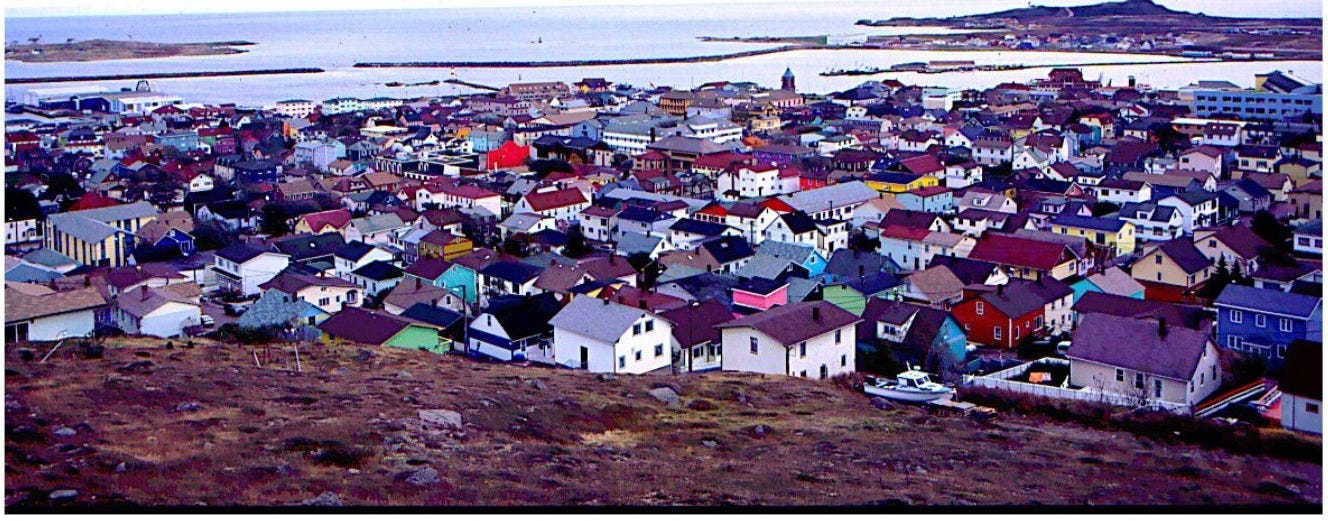
I start this dispatch on the cold, windswept islands of St. Pierre & Miquelon, an easily overlooked archipelago of eight rocky islands off the south coast of Newfoundland in eastern Canada. The islands have a total population of about 5,800 and a land mass about one-tenth the size of New Hampshire. They’ve been part of France since 1816, just after the Napoleonic Wars. And if you visit—as I did some years back—you’ll need to bring euros, a plug converter, and be prepared for the ambulances to make that WEE-wah-WEE-wah sound. It’s a little strange. The territory is basically an asterisk in the North Atlantic, both historically and geographically.
In recent years, the islands have been largely ignored—until Trump’s so-called “Liberation Day” on April 2. That’s when the island territory appeared on the now-infamous tariff chart, one of only two regions slapped with the maximum 50% duty on any and all exports to the United States. (The other was the diamond-exporting African nation of Lesotho.)
Let’s set aside the fact that St. Pierre & Miquelon isn’t actually a nation. And let’s overlook that the islands’ trade with the U.S. usually rounds down to zero—except in 2024, when a large fishing vessel loaded with $3.4 million worth of halibut offloaded in the U.S. (More details can be found in the Canadian publication The Logic.)
The few thousand island residents don’t really need to import much from the U.S., as France heavily subsidizes life here to retain its claim on potentially oil-rich seas. Last year, the islanders imported just $100,000 worth of U.S. goods. As a result of the fish deal, the trade deficit with the U.S. was 3,300 percent. Outrageous! Trump to St. Pierre & Miquelon: Your halibut is not welcome here!
There’s a lesson to be learned about trade on St. Pierre & Miquelon, but it’s not only about the hazards of rolling out a globe-shattering economic policy devised in 45 minutes by a half-dozen interns and a Magic 8 Ball. It’s about supply and demand—and what happens when you try to close off trade for goods that people really want.
I refer not to halibut. I refer to liquor.
This isn’t St. Pierre & Miquelon’s first happenstance brush with fame. That came during Prohibition, when the islands emerged as a major entrepôt for illegal hooch.
Florida ship captain and rum-runner Bill McCoy was said to have invented the smuggling trade on St. Pierre. (McCoy may also have lent his name to the phrase “the real McCoy,” referring to unadulterated booze.) One day he found himself stuck at a hotel in Halifax, Nova Scotia, trying to figure out what to do with a shipment of liquor threatened with confiscation by Canadian customs agents.
Pacing the lobby, McCoy ran into a man with a French accent and asked if he was from Quebec. No, the man replied, he was from St. Pierre. He also happened to be a licensed shipping agent. He told McCoy his problems would be solved if he diverted his cargo northward and offloaded at his warehouse—which was, technically, located in France. So McCoy did just that, and a profitable business relationship bloomed
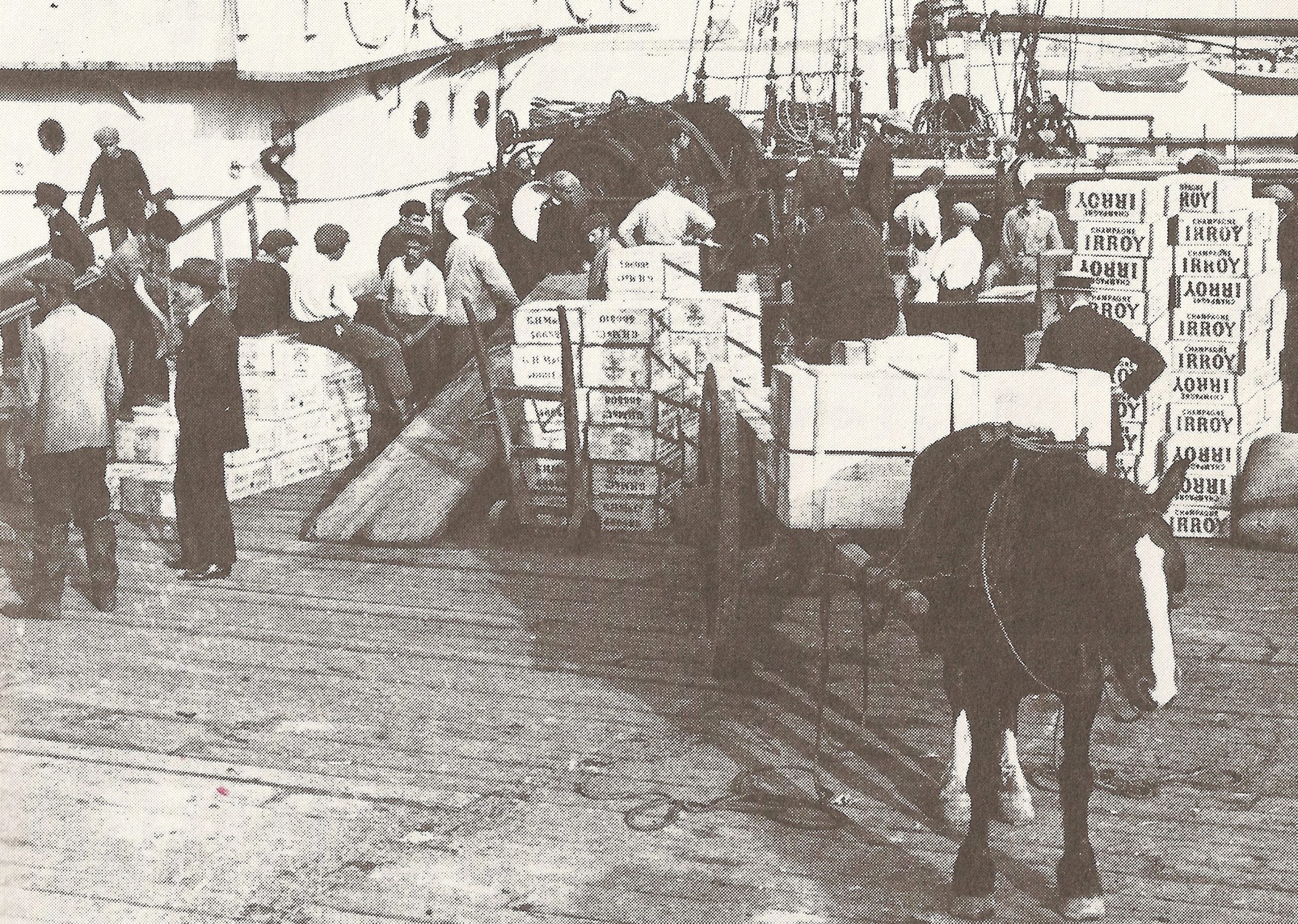
Others followed McCoy’s lead, and St. Pierre soon attracted a new class of visitor. “Steamers that ply between North Sydney and those attractive isles of the North Atlantic, St. Pierre and Miquelon, are carrying ever-increasing numbers of very busy American ‘business men’ these days,” The New York Times reported in 1921. The paper described the new arrivals as “well-dressed, black-cigar-smoking gentlemen.”
I first learned about McCoy’s outpost in the early 2000s from Jean Pierre Andrieux, whose family hails from St. Pierre and still has business interests on the island. “I grew up with stories of the whiskey times,” he told me during a visit. “My grandparents were traders—minor traders, but traders.” I had stopped by Andrieux’s house in St. John’s, Newfoundland, where he pulled from his closet a pair of huge red duffel bags full of Prohibition-era documents he’d salvaged from the attic of Henri Morazé, one of the island’s more infamous liquor dealers.
We sifted through various receipts and encrypted telegrams, along with a notebook filled with cryptic numbers and letters. “This is the code book,” Andrieux said. “When they would communicate from the ship, they’d send numbers, and here they would be translated.”
The shipping business at St. Pierre—the most populous island—took off, especially after Canada required liquor exports to be bonded and sold only to countries that allowed liquor sales. Companies like Samuel Bronfman’s United Distillers (later Seagram’s) set up offices and built warehouses on the island. They could legally ship product here from Canada, get documents that proved they had exported to a non-Prohibition destination (and thus reclaim their bond), then re-export it in what was euphemistically called the “St. Pierre–Bahamas trade.” Fishing schooners at first and custom built boats later would load up with Canadian whiskey or imported French brandy, and file manifests claiming their destination was the British-held Bahamas. But en route these ships were pulled westward by an irresistible economic magnetism, and these “Bahamas-bound” schooners would quietly appear idling off New England or Long Island at nightfall. After dark, sleek motor launches would dart out from the mainland and ferry their liquid cargo to dark coves.
Ships filled the harbor at St. Pierre throughout Prohibition. One reporter estimated that 15 to 20 rum-runners were tied up at any given time, with four or five heading southbound daily. In 1931, enough liquor was imported for every islander to consume 453 gallons were it to remain on the island. Which it assuredly did not.
Life on the hardscrabble island grew sweet. The sounds of accordions spilled out of the Café de Paris, and “St. Pierre went in for pianos,” a reporter noted. An automobile dealer opened shop and sold cars on an island where the longest road was all of four miles.
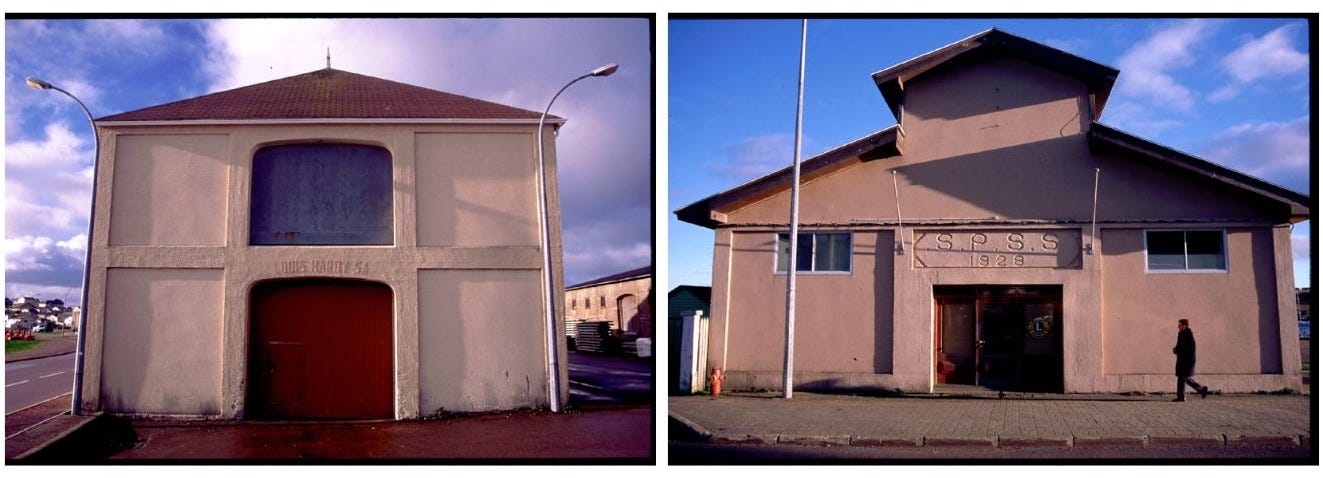
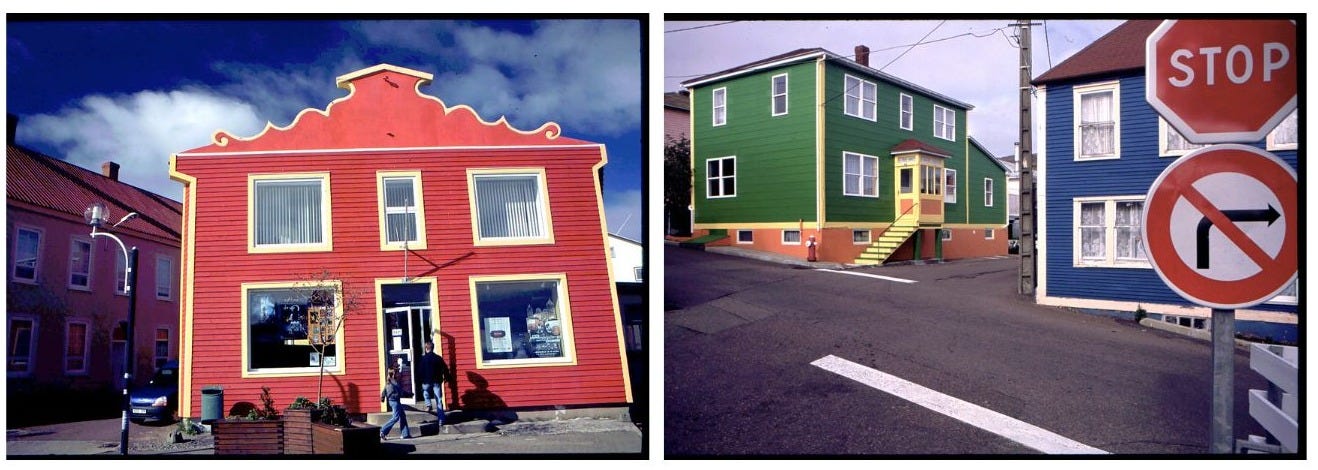
Today, you can walk along the harbor and see about two dozen stout, concrete warehouses built for the trade, each emblazoned with “SPSS 1928” or similar—marking “Saint Pierre Ship and Stores.”
How Trump will punish Canadian and Mexican liquor producers remains to be seen. In the last round of tariff announcements, the administration held off on boosting tariffs on goods previously covered by a trade agreement negotiated five years ago.
But even without new tariffs, Trump’s bellicose attitude toward, well, everyone, but especially Canada, has already impacted the liquor trade. Canada has quickly soured on all things American. U.S. liquor has been swept off the store shelves in some provinces; European imports are on the way to fill the void, aided by a 2017 trade agreement between Canada and the EU that eliminates tariffs on spirits and wines.
Meanwhile, EU spirits headed to the U.S. will now be hit with at least a flat 20 percent duty, which applies to all imports—including liquor. If the distributor and liquor store pass along the duty (which is likely), a $50 bottle of whiskey or brandy will now cost closer to $55, assuming the dock price is half the shelf price.
And that’s also assuming tariffs remain at 20%. The tariff piano hasn’t fallen on consumers yet. Just under a month ago—which is about a decade in Trump years—the president threatened to slap European wines and spirits with a 200 percent tariff in a fit of pique. That may well return, depending on whether Europe retaliates with taxes on American whiskey (which is rumored) and depending on which side of the bed Trump wakes up. International trade craves certainty, and some exporters may decide to focus on more reliable markets—at least until sanity returns to the U.S.
Which sets the stage for a return to wholesale smuggling.
It’s a truism in international trade: where demand exists, supply will find a way, even if significant obstacles exist. (See: Prohibition.) “Trump has just opened perhaps the greatest arbitrage opportunity in the history of world trade,” David Frum recently wrote in The Atlantic. “His effort to repeat the Smoot-Hawley tariffs of the 1930s will also replicate the cross-border bootlegging of alcohol during Prohibition.”
If the price of liquor rises sharply and availability of liquor imports declines in the U.S.—as seems likely if the tariff wars persist—expect improved buying opportunities at liquor shops just across our borders, from St. Stephen, N.B., to Tijuana, Mexico.
As Frum pointed out, the U.S. has a hard enough time stopping the flow of fentanyl (which Trump has used to justify tariffs on Canada and Mexico). According to the American Addiction Centers, 539,000 people misuse fentanyl. But about 190 million Americans drink alcohol. So good luck with crimping supply lines—especially if enforcement further atrophies from federal staffing cuts.
Granted, American-made alcohol will supply much of the demand. But long-established tastes for foreign-born spirits, like mezcal, cognac, Scotch, and specialty spirits like Chartreuse and Benedictine, won’t be readily abandoned.
If your investments have taken a hit in the last few days, may I suggest going in with me on a speedy motor boat that we can keep tied up in remote eastern Maine? Let’s make arbitrage fun again.
Fascinating!