

Hundred-Proof Prospecting, or What I Learned at Whiskey Social Houston
Sampling $70 whiskeys in a $35 world

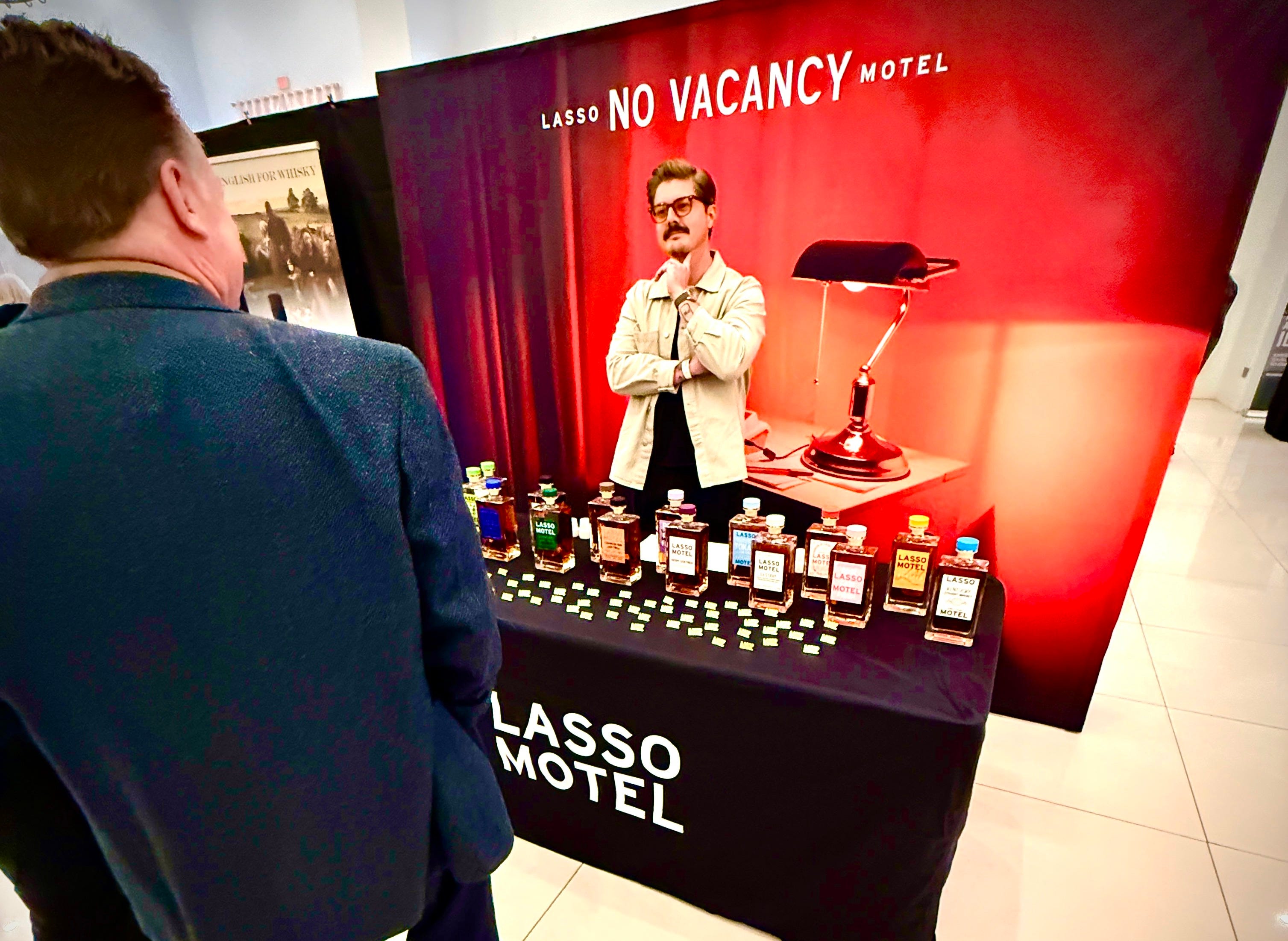
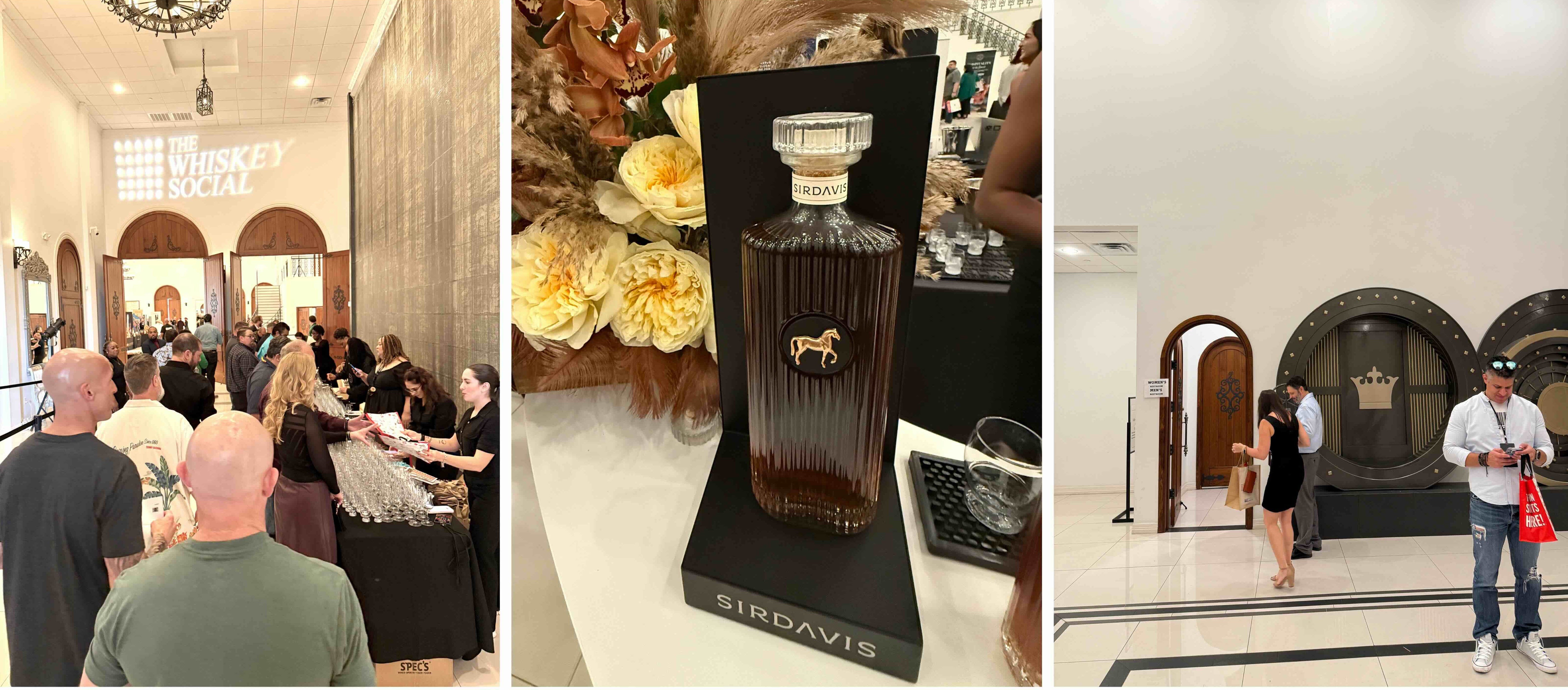
It was 4:45pm last Saturday and a hundred or so eager and thirsty people stood behind retractable belt barriers of the sort that forge order from chaos at airports. The milling throng was waiting for flights, but not those kinds of flights.
We’d been waiting for three-quarters of an hour for the opening of Whiskey Social Houston, one of the larger whiskey events held in the city. The ticket said the doors opened at four, but upon arrival we were told we weren’t allowed on to the floor until five. The crowd was getting a little testy with the waiting, but then a man with enviable hair moved through the crowd pouring shots of Weller 12, and rebellion and savagery was forestalled.
Then a cheerful woman in a white sweater dress moved along the line and announced that in just a few minutes we would be allowed to spill out into the hall, where dozens of brands had set up stations. The catch was that we would not be able to actually drink anything until the top of the hour. Be patient, she advised. Don’t harass the whiskey vendors.
Then the nylon belts came down and the crowds moved with nonchalant urgency through the two rooms, and knots of people gathered around tables and people lined up at the most desirable pours. Because they couldn’t extend their tasting glasses for a pour, no one seemed sure what to do with their hands and stood around like frat boys at a strip club.
At precisely five p.m. the all clear was sounded and bottles went from upright to inverted and glencairns from clear to amber. The crowds pressed in with glasses held out, like baby starlings mewling to be fed.
I’m describing this as if you’ve never been to one of these spirit tasting events. But if you’re reading this Substack I’m guessing you have. Yet every time I attend such an event it feels like my first day all over again — I’m never sure where I should stand when queuing for a sample, and never know what order to pursue my pours. It’s like being at the opening gate at Disneyland — it’s good to have a plan, but also to be prepared to alter it on the fly.
A few takeaways:
• Barrell Spirits had the longest line at the opening bell, spilling into the adjacent room where a vendor was giving away samples of a hangover cure. Barrell Spirits has developed an almost cultish following, which speaks to the state of whiskey since they’re an independent bottler and don’t have a distillery, but they source, blend, and age. A decade or two ago, that might have mattered but it doesn’t now.
I circled back to Barrell when the line had diminished and very much enjoyed a sample of their Dovetail, which was deeply structured, high proof and brought to mind a caramel candy that hasn’t been invented yet but probably should.
Within twenty minutes of opening the longest lines moved to The Dalmore, then a while later reformed at the Luxco table, where they were dispensing samples of Penelope Bourbon, another popular sourced bourbon.
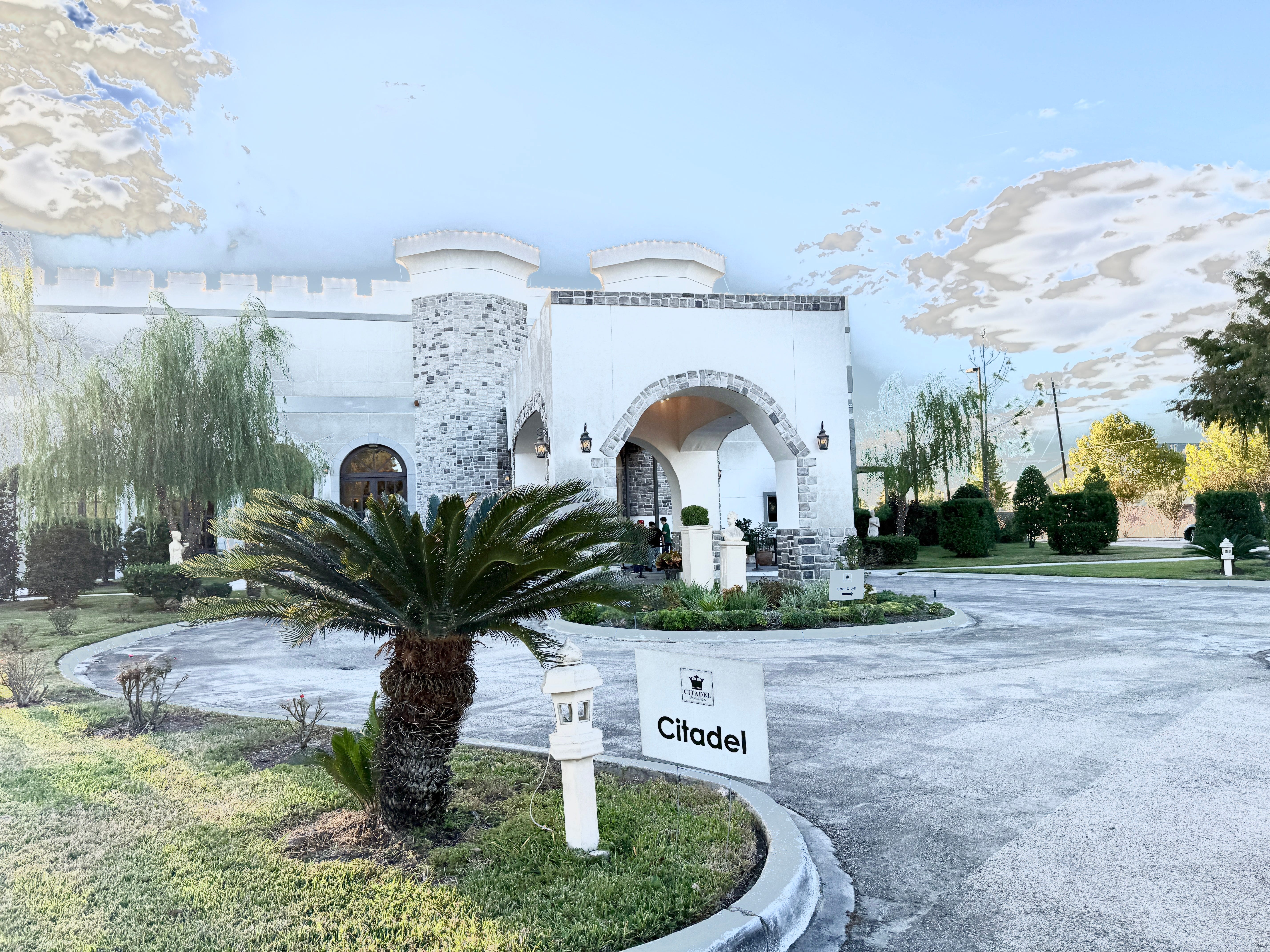
• The event was held about a half-hour south of downtown Houston, which is still in Houston, off a highway and past some vacant lots edged with barbed wire tangled with shredded plastic shopping bags. The advance billing for the event claimed 350 vendors would be dispensing samples, and so I was expecting a cavernous space, maybe something like the Superdome. But it was actually at a wedding venue and event space called The Citadel, which is 25,000 square feet, or about the size of an average Texas oilman’s house.
From the outside the place looked like a castle out of Scooby Doo, complete with cartoon crenellations. Inside, the main ballroom was glossy and very white with lots of chandeliers, and gave off big Dubai vibes.
I walked around and did a rough count of vendors, and I estimated 60 tables were set up. But some tables were dispensing multiple brands, so it was probably more accurate to say that it was the event featured 350 SKUs, including some gins, vodkas and rums.
• I knew a guy who knew a guy, so was directed to a table staffed by the folks from Reserve 101, an excellent whiskey bar in downtown Houston. Here I was given a vintage negroni, made with Campari from the 1970s and some gin from the 1980s, although I neglected to get the gin’s name. The cocktail was small and delicious and so tasty I didn’t even think to ask, hey, why are you pouring this at a whiskey event?
• A big whiskey event like this is essentially a mixtape, and having some favorites cycle through is always welcome. I was happy to see Robert Likarish from Ironroot Republic out of Dennison, Texas, and sample his superb Saints Alley cigar blend whiskey, aged 10 years and finished in Armagnac and sherry casks. Also I enjoyed hanging out with Bryan Smith, master distiller at Hard Truth in Indiana, which has been consistently releasing some of the biggest and boldest craft bourbons and ryes today.
• Also like listening to a mixtape, browsing an event like this is a great way to be exposed to the unfamiliar.
I hadn’t heard of RD One Small Batch Bourbon from Lexington, Kentucky, and I stopped by for a pair of pours: their bourbons aged with Brazilian amburana wood and another with maple and French oak. Both were dense and supple and I would have no objection to a second round. Their table was festooned with wood chips the size of tea bags, which is how these wood notes make their way into the barrel. The aroma of the amburana lingered in my tasting glass for the rest of the night and resisted even repeated rinses.
I was also impressed with the Austin 121 Light Whiskey, one of a category that doesn’t get much love in part because of misperceptions. (Note: it’s not a diet whiskey.)
Light whiskey comes off the still at a higher proof than bourbon, and has been popular among independent bottlers in large part because it can be aged in cheaper, previously used barrels (unlike bourbon, which requires new barrels). The parlor trick is to bottle it at higher proof, which concentrates flavors. And the trick works in this case — the entry was surprisingly light for 121 proof, and reminded me of an Irish whiskey. But then the deeper flavors kicked in and flourished and came to life nicely.
Both of these brands retail for upwards of $70. And therein lies the rub. Given that a quality whiskey, like Michter’s US1 bourbon or rye, can readily be found for half the price… well, it’s hard to see much maneuvering room for new brands like this. The mood in the hall was lively and upbeat, but this was the Thunderdome if you’re in the whiskey business, and the buy-cheap-sell-high strategy may have run its course.
• On the flip side, I was able to taste some spirits that I needn’t taste again. This included, surprisingly, the Basil Hayden Toast Bourbon (the mash bill replaces rye with brown rice), which was thin and anemic and wholly uninteresting. Not surprisingly, I won’t need to repeat a taste of the Crown Royal Chocolate Flavored Whisky, which had notes of a chocolate bar left on a vinyl dashboard in the Texas summer.
• “Hey, nice Rolex!” said one attendee to a vendor exposing his watch has he reached to pour a sample. For a moment the talk at the table shifted from whiskey to watches. And it reminded me of two things: Not all distillers are suffering financially. And a whiskey event like this is as much about status as it is about flavors.